Презентация - "Презентация к уроку английского языка по теме "Ирландский диалект""
- Презентации / Другие презентации
- 12
- 21.10.23
Просмотреть и скачать презентацию на тему "Презентация к уроку английского языка по теме "Ирландский диалект""
Сайт klass-uchebnik.com предлагает качественные учебные материалы для школьников, родителей и учителей. Здесь можно бесплатно читать и скачивать современные учебники, рабочие тетради, а также наглядные презентации по всем предметам школьной программы. Материалы распределены по классам и темам, что делает поиск максимально удобным. Каждое пособие отличается логичной структурой, доступной подачей материала и соответствует действующим образовательным стандартам. Благодаря простому языку, наглядным схемам и практическим заданиям, обучение становится легче и эффективнее. Учебники подойдут как для ежедневной подготовки к урокам, так и для систематического повторения перед экзаменами.
Особое внимание стоит уделить разделу с презентациями - они становятся отличным визуальным дополнением к теории, помогают лучше понять сложные темы и удерживают внимание учащихся. Такие материалы удобно использовать в классе на интерактивной доске или при самостоятельной подготовке дома. Все размещённые на платформе материалы проверены на актуальность и соответствие учебной программе. Это делает сайт надёжным помощником в образовательном процессе для всех участников: школьников, учителей и родителей. Особенно удобно, что всё доступно онлайн без регистрации и в свободном доступе.
Если вы ищете надежный источник для подготовки к урокам, контрольным и экзаменам - klass-uchebnik.com станет отличным выбором. Здесь вы найдёте всё необходимое, включая "Презентация к уроку английского языка по теме "Ирландский диалект"", чтобы сделать обучение более организованным, интересным и результативным.

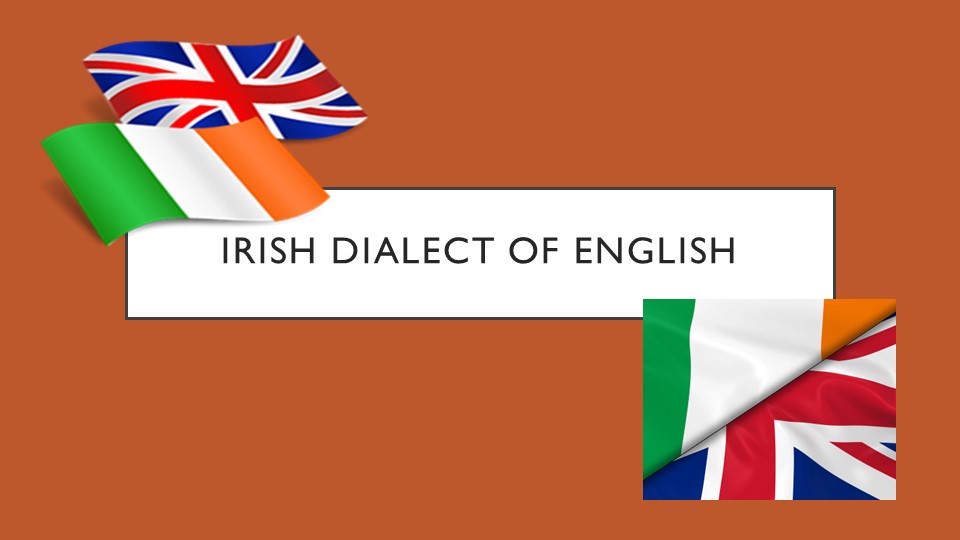
Irish dialect of English

“A man with an Irish accent could sound wise and poetic and interesting even if he wasn’t.” - Kate Atkinson

The Origins of English in Ireland
There are two main languages in Ireland. English was first brought to Ireland by English colonists in the 13th century. It took some time for English to establish a foothold in Ireland. By the 17th century, when the Tudors conquered Ireland, English was adopted in the court, judiciary institutions, administrations, and even by businesses.
Irish speakers were considered to be poor and less intelligent than those who spoke English as their mother tongue and English became the essential language for those wanting to get ahead in this new society. As a testament to the language’s nation and international importance, it’s the most commonly taught language in Ireland.
However, Irish English, just like Scottish English, also includes a variety of different dialects. There are also regions where Irish Gaelic (known locally as just Irish) is spoken. Since Ireland’s independence, there have been attempts to increase the use of Irish in the country.

English and Irish: Two Different Languages
Both Irish and English are the official languages of Ireland. Two languages for two civilisations, a challenging part of Ireland’s history. Currently, the Irish government attempts to make the two languages equal by giving the Irish language the status of the country’s first official language. However, Ireland is a predominantly English-speaking country in terms of its popular culture.

The Particularities of Irish English
Like all languages, there are different variants of English around Great Britain and Ireland.
Here’s some advice to get you started speaking like a local. In terms of pronunciation, the vowels are softened and the consonants hardened. For example, the letter “a” is pronounced as an “ah” or “aw” in Ireland. “How are you?” would sound like “Ha ware ya?”. The same happens with the “aye” sound, which becomes “oi”: Ireland being pronounced like Oireland.
In terms of consonants, most of them are pronounced differently as to how they would be in the United States of America. The “t” in certain words is pronounced like a “ch” (tube is pronounced as choob, for example) and the “th” is pronounced like a “d” for words like “that” and a “t” for words like “think”.
The letter “g” at the ends of words is almost never pronounced: Morning and walking become mornin’ and walkin’.

Thank you for your attention